Expressive vs Receptive Aphasia After Stroke
Medically reviewed by Karen Murray, OT, CHT, CSRS - written by Stroke-rehab.com
 Image by Drazen Zigic on Freepik
People often ask what the difference is between expressive vs receptive aphasia after stroke. Patients may experience one or even both of these forms of aphasia which can result in problems with the ability to communicate. Reading and writing can be effected as well. Expressive aphasia will result in difficulty with articulating or saying words, but there is often good comprehension and understanding of spoken language. Receptive aphasia, on the other hand, causes impairment in one's ability to understand language thus comprehension may be poor.
Understanding Aphasia
Aphasia occurs when damage to specific regions of the brain disrupts the nerve pathways responsible for language processing. The damage to the brain can affect speaking, comprehension, reading, writing skills, and understanding of symbols often leading to frustration and feelings of isolation for the individual and their loved ones. There are different types of aphasia, each presenting with distinct characteristics. Detailed descriptions of expressive vs receptive aphasia after stroke are discussed below.
Expressive vs Receptive Aphasia Types
Wernicke's Aphasia
Wernicke's aphasia, also known as "fluent aphasia", is a receptive aphasia disorder where stroke victims often have great difficulty with understanding speech. Their pattern of speech may sound right, but they often say words or sentences that don't make sense and may not be aware that they are saying the wrong words. Reading and writing are often grossly impaired. Individuals may say a string of unrelated words that are baffling to the listener.
Broca's Aphasia
Broca's Aphasia, also known as "non-fluent aphasia", is an expressive aphasia disorder. Speech production is severely limited often to less than four words. The words used frequently make sense, but the stroke patient has great difficulty coming up with the words and does not form complete sentences. For example, the person may say "bathroom" instead of "I need to go to the bathroom". The patient with this type of language disorder may be able to understand speech and be able to read but have difficulty with writing. Expressing thoughts becomes a challenging task.
Global Aphasia
Global aphasia is a severe language disorder and is characterized by the stroke victim neither understanding or speaking language. The ability to read and write is also lost. It is a result of extensive damage to the language areas of the brain. Global aphasia is the most severe form leading to very limited communication abilities because both receptive and expressive language is affected.
Anomic Aphasia
Anomic Aphasia, sometimes called anomia or nominal aphasia, primarily impacts the ability to retrieve words. Individuals often struggle to find the right words to express themselves which negatively affects their ability to speak or write fluently. To compensate for word-finding difficulties, people with anomic aphasia often use circumlocution, which means they talk around the word they can't remember. They might describe the word's meaning or use related words to convey their message.
To learn more about other types of receptive and expressive speech disorders, visit the National Aphasia Association web page.
Aphasia Treatment
Speech Language Therapy
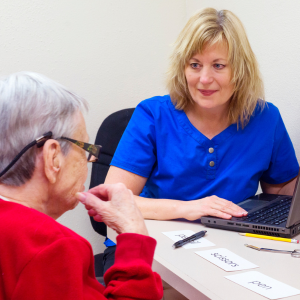
Stroke victims with speech difficulties should seek out the assistance of a licensed speech and language pathologist (SLP) often referred to as a speech therapist by patients. SLPs play a central role in aphasia rehabilitation. They employ various techniques to improve language comprehension and expression, such as word-finding exercises, repetition drills, and conversational practice. Cognitive rehabilitation exercises will also be used to address attention, problem-solving, and memory challenges. A SLP can work with stroke patients to help restore impaired language abilities, maximize remaining language function, and teach techniques to compensate for language deficits.
Augmentative and Alternative Communication (AAC)
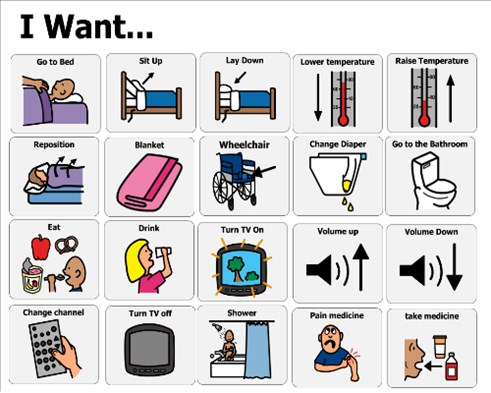
Compensatory techniques taught by SLPs or speech therapists may include using gestures, using pictures, writing, or Augmentative and Alternative Communication (AAC) involving the use of communication boards or speech-generating devices. For individuals with severe aphasia who struggle with verbal communication, AAC methods offer alternative ways to express themselves. You can buy a variety of communication boards online or get a free printable communication board at https://www.do2learn.com/adult/index.htm
An example of a communication board is provided below:
Computer programs that are used to help treat language disorders are designed to help improve reading, speech, recall, and comprehension. The computer can help stimulate the stroke victim's vision and hearing at the same time which is beneficial to the recovery process.
There are also phone and tablet apps that can be used to help with speech difficulties or act as assistive communication device. Some apps that are currently available include:
For IPad:
Vocally
My Talk Tools
My Voice Communication Aid
Comprehension TherAppy
Dragon Dictation
Small Talk
Talk Path
iName It
For Android
JABtalk
AAC Speech Communicator
AAC Speech Buddy (also for IPad)
TaptoTalk (also for IPad)
Quick Talk AAC (also for IPad)
Aphasia is a complex language disorder that often accompanies stroke, affecting the way individuals communicate and interact with the world. Through dedicated and comprehensive aphasia rehabilitation, stroke survivors can make remarkable progress in regaining their language abilities and rebuilding their connections with others.
Get Our Stroke Rehab Guide
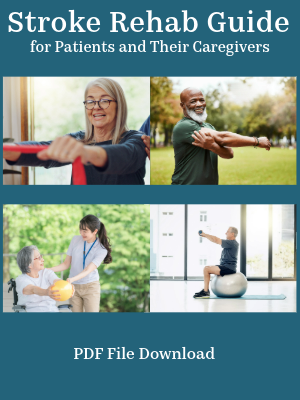
Our comprehensive stroke rehab guide in pdf format is designed for both patients and caregivers who want clear, practical ways to support recovery, improve daily function, and regain independence at home. It includes
- Rehab exercises with pictures for safe home practice
- Physical, occupational, and speech therapy guidance
- Tips for daily activities and adaptive equipment
- Answers to common questions from patient and caregivers
- Information on stroke causes, treatment, and prevention
A single therapy visit can run $150 or more. The Stroke Rehab Guide is only $14.99, and includes a pdf guide you can continue to refer to in the future with exercises and information on stroke recovery. In addition, any time an update or new version of the guide is written, you will get the updated version for free.
About the Author
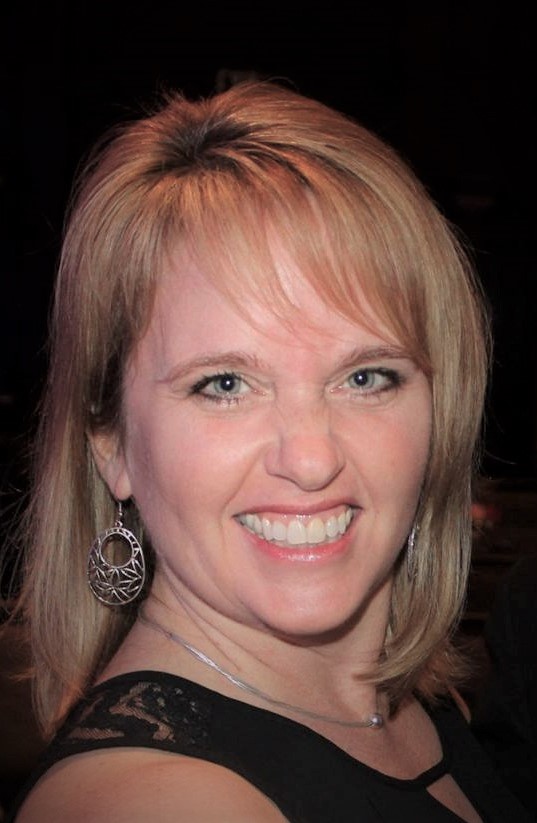
Karen Murray, OTR, CHT, CSRS, is a licensed occupational therapist, Certified Stroke Rehabilitation Specialist, Certified Hand Therapist, and Certified Personal Trainer with over 29 years of experience working with stroke survivors in hospital, outpatient, and home settings. She founded Stroke-Rehab.com to help patients and caregivers better understand stroke recovery, find evidence-based resources, and regain independence at home.
Medical Disclaimer: All information on this website is for informational purposes only. This website does not provide medical advice or treatment. Always seek the advice of your physician or other healthcare provider before undertaking a new healthcare or exercise regimen. Never disregard professional medical advice or delay seeking medical treatment because of something you have read on this website. See the disclaimer page for full information.
Recent Articles


-
Are Strokes Hereditary? 8 Genetic Risk Factors to Know (2026 Guide)
 Is stroke risk in your DNA? Are strokes hereditary? Learn 8 genetic factors to watch for and how to protect yourself.
 -
Home Exercise Equipment For Stroke Patients. Rehab at Home.
 Continue your stroke rehab at home with your own home exercise equipment. Examples of inexpensive exercise equipment for home use.
 -
Balance Exercises for Stroke Patients: Prevent Falls!
 Pictures of balance exercises in sitting and standing to help stroke patients.
 -
Flaccid Paralysis Treatment After Stroke: Questions & Answers
 Answers to questions about flaccid paralysis treatment after stroke including home exercises and treatment ideas.
 -
Leg and Foot Problems After Stroke
 Answers to stroke patients' questions regarding foot and leg problems after stroke
 -
What is a Good Gift for a Stroke Patient: Gift Giving Guide
Gifts for Every Stage of Stroke Recovery: From practical aids to inspiring keepsakes, find the perfect present for your loved one. -
Stroke Recovery Tips Back Issues from Stroke Rehab Website
 View past issues of Stroke Recovery Tips Newsletter to learn unique information about stroke rehabilitation.
 -
Gift Ideas for Stroke Patients for Recovery, Comfort & More
Top gift ideas for stroke patients and stroke recovery and rehabilitation. -
Jerking Movement After Stroke
Question: Why is there a sudden jerk on the paralyzed/flaccid side of a stroke patient? Is it normal or not? Answer: Here are a few of the reasons stroke -
Hand Exercises for Stroke by Certified Hand Therapist
 Hand exercises for the stroke patient that will improve fine motor skills.


Sign Up For Our Newsletter

Newsletter Sign Up
Receive Stroke Recovery Tips, our online quarterly newsletter. Sign up below for free tips on exercises, resources, latest technology, apps, research and more!
To view past issues of Stroke Recovery Tips, visit https://www.stroke-rehab.com/Stroke-Recovery-Tips-BackIssues.html